Licensing in Canada for internationally trained physicians
Which of these is you?
I trained in family medicine or general practice, and I want to practise in Canada.
Nine provinces run a Practice-Ready Assessment (PRA) for family physicians. You practise under observation for a period, typically around 12 weeks, and a pass leads to a conditional licence with a return of service. Selection is competitive, and each province sets its own exam and currency rules.
Check your eligibility, province by province →Compare all nine PRA programsI trained in a specialty, and I want to practise as a specialist.
Two routes lead to specialist practice. The Practice Eligibility Route (PER) is national and run by the Royal College; its eligibility step is document based and can be started from abroad, and certification follows the exam and two years of supervised practice in Canada. The specialist PRA is provincial and workplace based. Four provinces run one, Alberta, Manitoba, Quebec, and Nova Scotia, each for the disciplines it is currently assessing, and each asks for a job offer first.
Open the PER guide for your specialty →PRA for specialistsLooking for a fellowship instead?I want to work in medicine before I hold an independent licence.
Clinical assistant and associate physician roles let you work under a licensed physician's supervision. You are never the most responsible physician. The role is not a licensure pathway on its own, but licensed time in it counts toward the currency requirement of some PRA programs.
See the roles, province by province →All provinces comparedI want to do a residency in Canada.
Residency positions are filled through the CaRMS match. You apply to programs, interview, rank them, and the algorithm matches you. Most programs ask for the MCCQE and the NAC, and most program descriptions say what they want in your CV and personal letter.
The match, the timeline, and the data →The CaRMS CV and personal letter courseI need to pass the exams first.
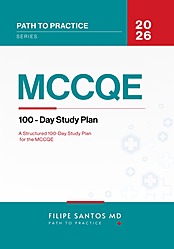
The Medical Council of Canada (MCC) runs the MCCQE, the NAC Examination, and the TDM Examination. Which ones you need depends on the route and the province. Start with the format of each exam, then build a study plan around it.
The MCCQE, explained →The NAC OSCE, explainedFree MCQ of the dayI do not know which of these I am.
Answer a short set of questions about your training, your practice, and your exams, and the screener compares your profile against every family medicine PRA program and every clinical assistant and associate physician licence. Nothing you type is stored.
Run the eligibility screener →Or talk it through in a consultationFind
Start Here: pick the sentence that describes how you trained, and see which route fits.
2Check
Run the screener, or the PER guide if you are a specialist, against your own training, practice, and exams.
3Prepare
Gather the documents your route lists, and track every exam and application date on the Deadline Radar.
 Built and maintained by Filipe Santos MD, internationally trained anesthesiologist, licensed in Canada.
Every date and claim checked at its source. Prefer to talk it through? Book a consultation →