The 100-Day NAC Study Plan
Path to Practice Series, Vol 3
Stop deciding what to study every morning.
Most IMGs preparing for the NAC are not short on materials. They have Toronto Notes. They
have OSLER AI. They may have the OSCE Handbook and the Edmonton Manual on the shelf.
What they don’t have is a plan, and so every morning starts with the same question and the same
lost time: what am I doing today?
This is the answer. 100 daily sessions, structured into 5 phases, with the priorities and the
rotation already decided for you. You open the page, you do the work, you close the day.
The decisions are already made.
Built on the learning science that actually works
The plan is not a list of topics laid out in order. It is a deliberate application of the learning
techniques that decades of cognitive research have shown to outperform passive review:
♦ Spaced repetition. Topics return at calibrated intervals, not on the days they were first
studied, so material is encoded into long-term memory rather than crammed.
♦ Interleaving. Disciplines and station types are mixed across the rotation rather than
blocked together, which is how the exam itself presents material and how the brain best
learns to discriminate between similar problems.
♦ Active recall. Every standard day opens with a brain dump, where you reconstruct what
you remember from memory before opening any reference. This is the single most
evidence-based study technique in cognitive science.
♦ Tiered prioritisation. Every topic in the plan is tagged by tier so the highest-yield material
gets the most repetitions across the 100 days. The mixing is built into the schedule itself, so
you don’t have to design it.
♦ Reflection. Every day closes with prompts that surface recurring weak spots and feed
directly into the next spaced review
What’s inside
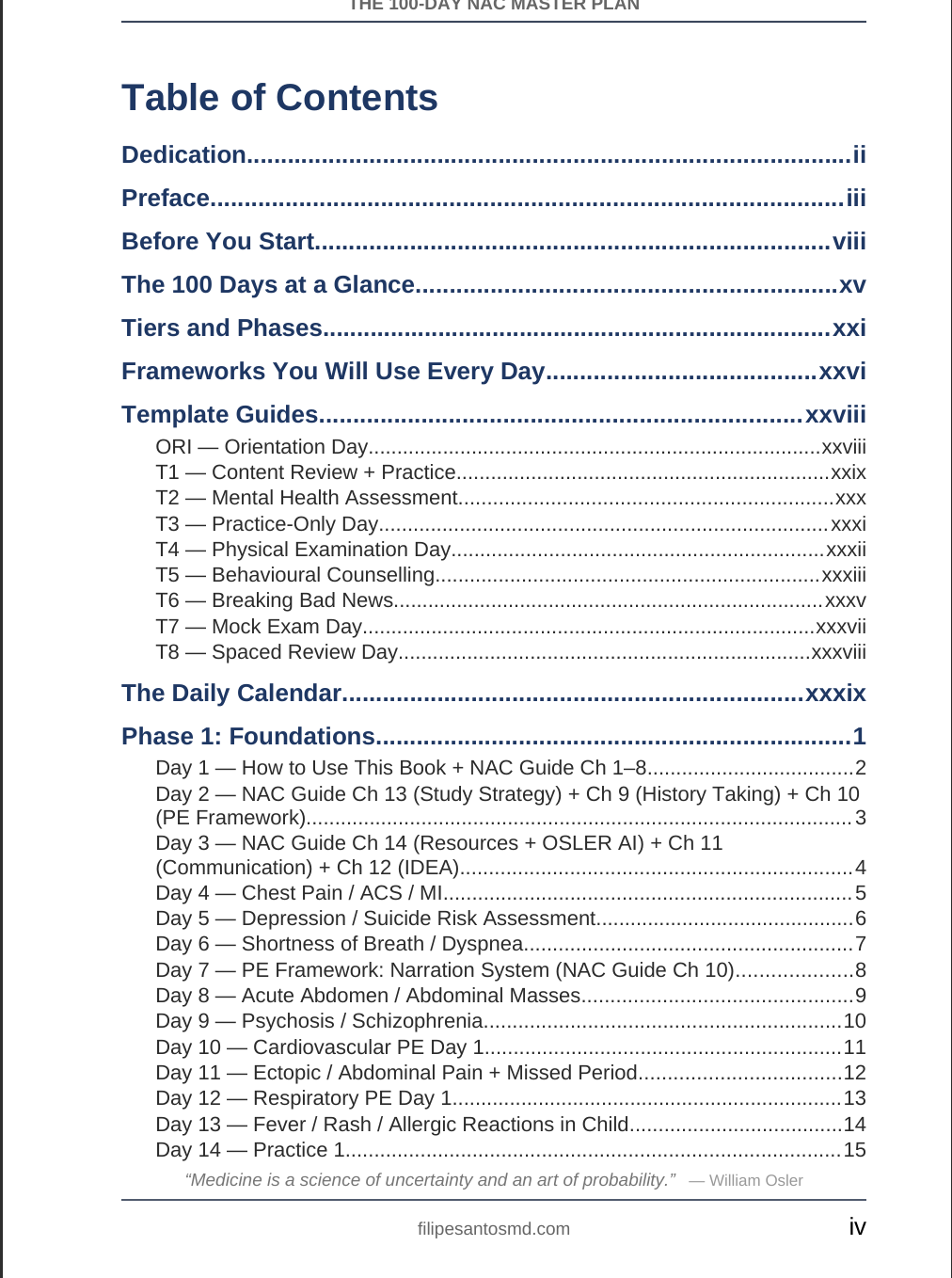
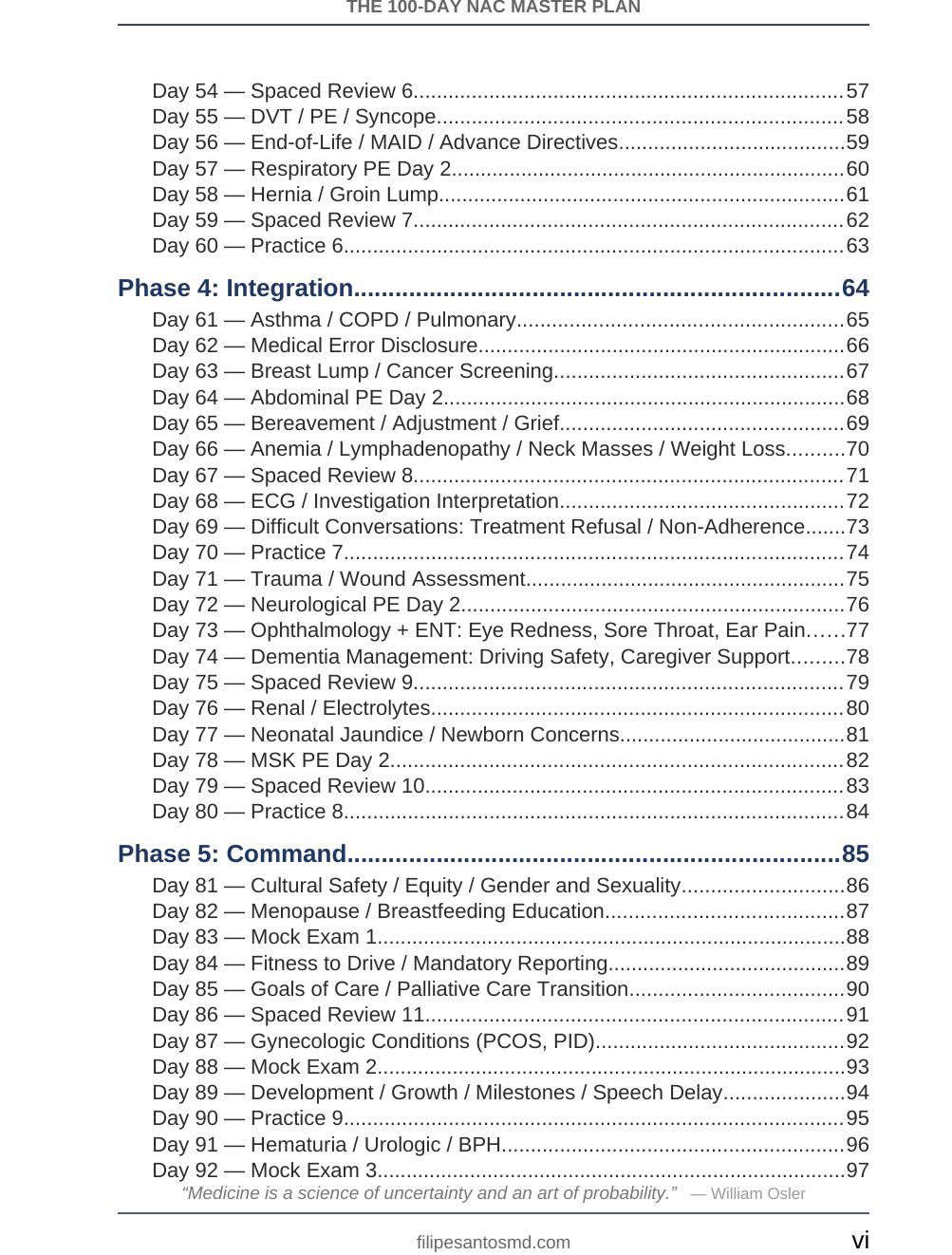
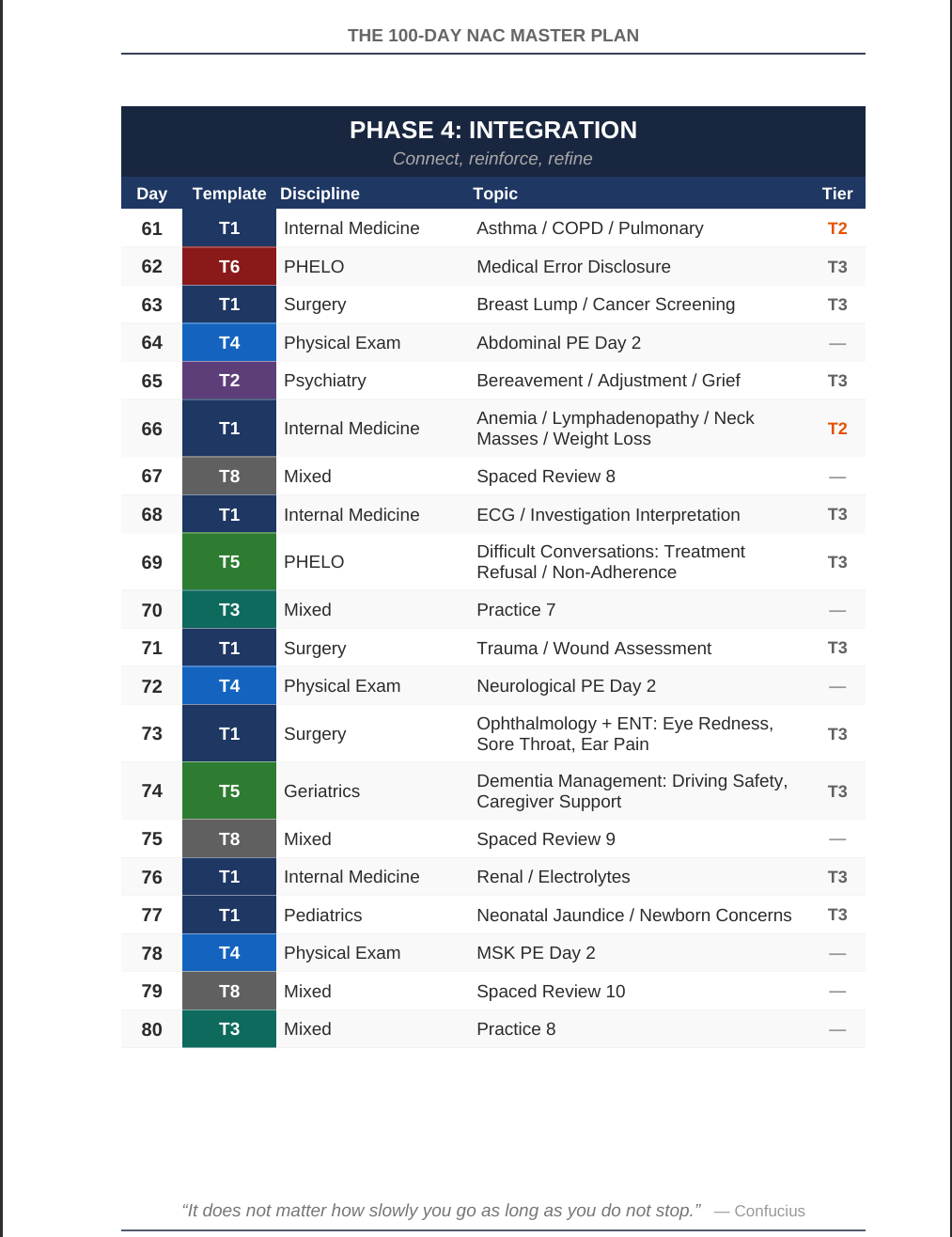
100 daily session cards. Each day specifies the template, the discipline, the topic, the tier, and
the resources to use. No daily decisions. Open the page and execute.
5 phases with deliberate pacing. Foundations, Momentum, Pivot, Integration, and Command.
Each phase has a different purpose, and the workload is calibrated so you arrive at the exam
having peaked, not burned out.
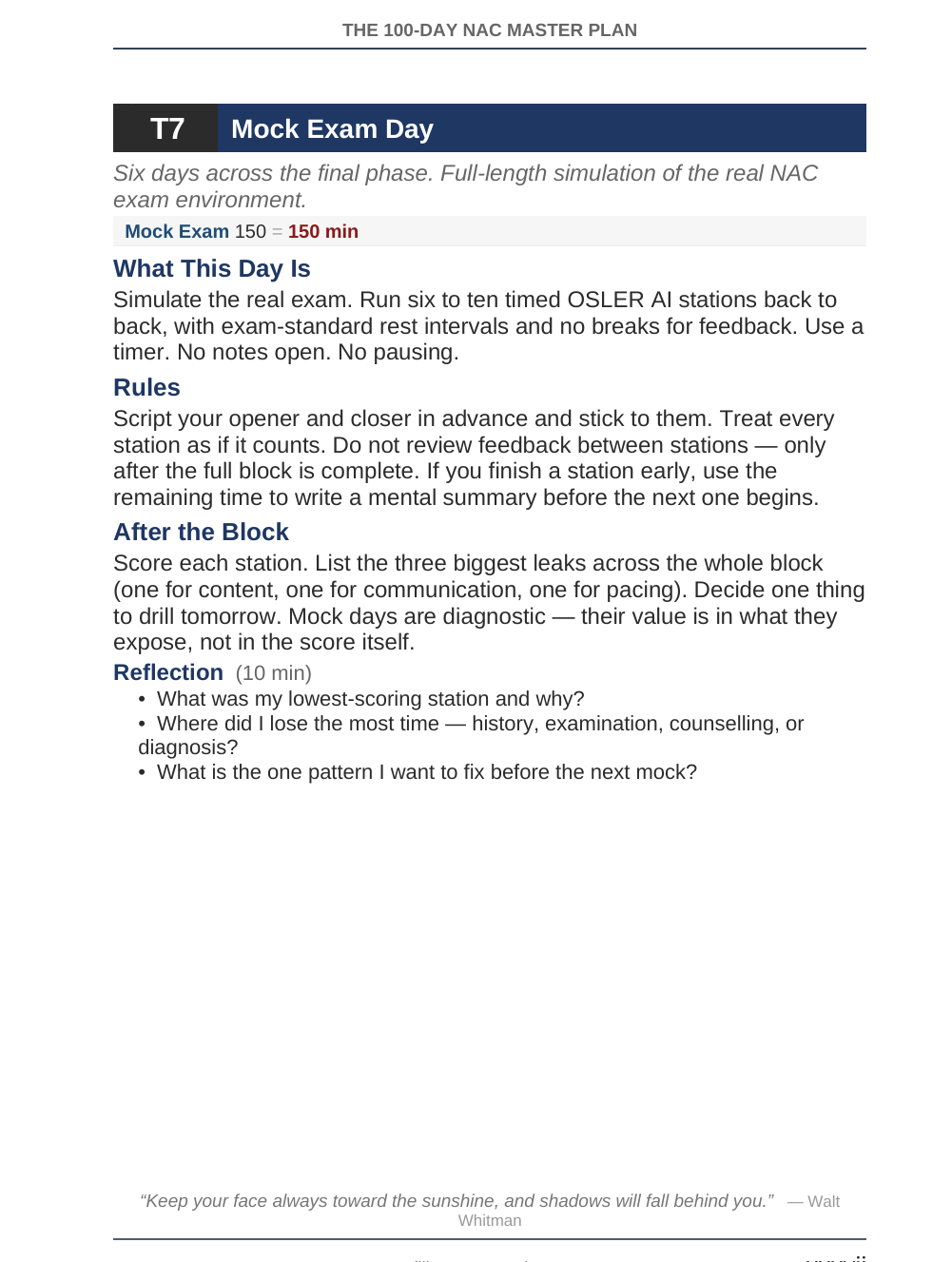
9 session templates that handle every type of day. T1 for most clinical content. T2 for psychiatry
with the MSE. T4 for physical examination. T5 for behavioural counselling. T6 for breaking bad
news. T7 for mock exam. T8 for spaced review. The structure is decided once and reused.
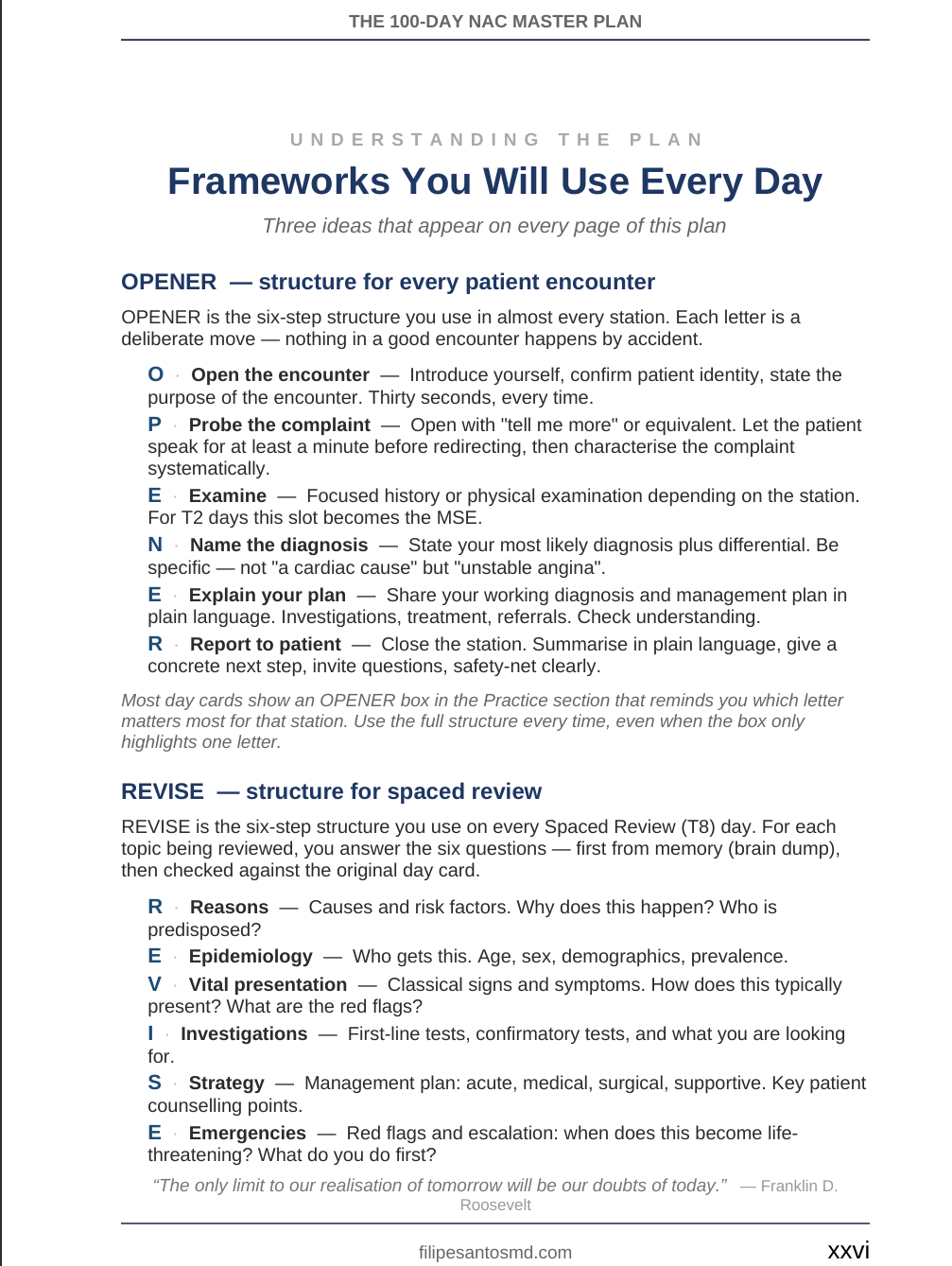
The OPENER framework. The six-step encounter structure used in almost every station, with
deliberate cues for which letter matters most for that station type. Practice blocks throughout the
plan are built around it.
The REVISE framework for spaced review. A six-step recall structure used on every spaced
review day, designed to surface where your understanding actually breaks down, not just where
it feels shaky.
A built-in mock exam progression. Six full mock exams structured into Phase 5 (Command),
with reflection windows around each one so you turn each mock into a diagnostic, not just a
stress test.
This is for you if
♦ You are preparing for the NAC and want the structure handled for you
♦ You learn better against a deadline and a daily session than from open-ended study
♦ You are willing to use evidence-based techniques even when they feel less comfortable
than re-reading
How to use it
The plan is 100 days, paced however you decide. Most candidates run it as 100 consecutive days.
Some take a recovery day each week. Some stretch it across longer windows. The plan does not
stipulate when you study, only what to study and how the day is structured.
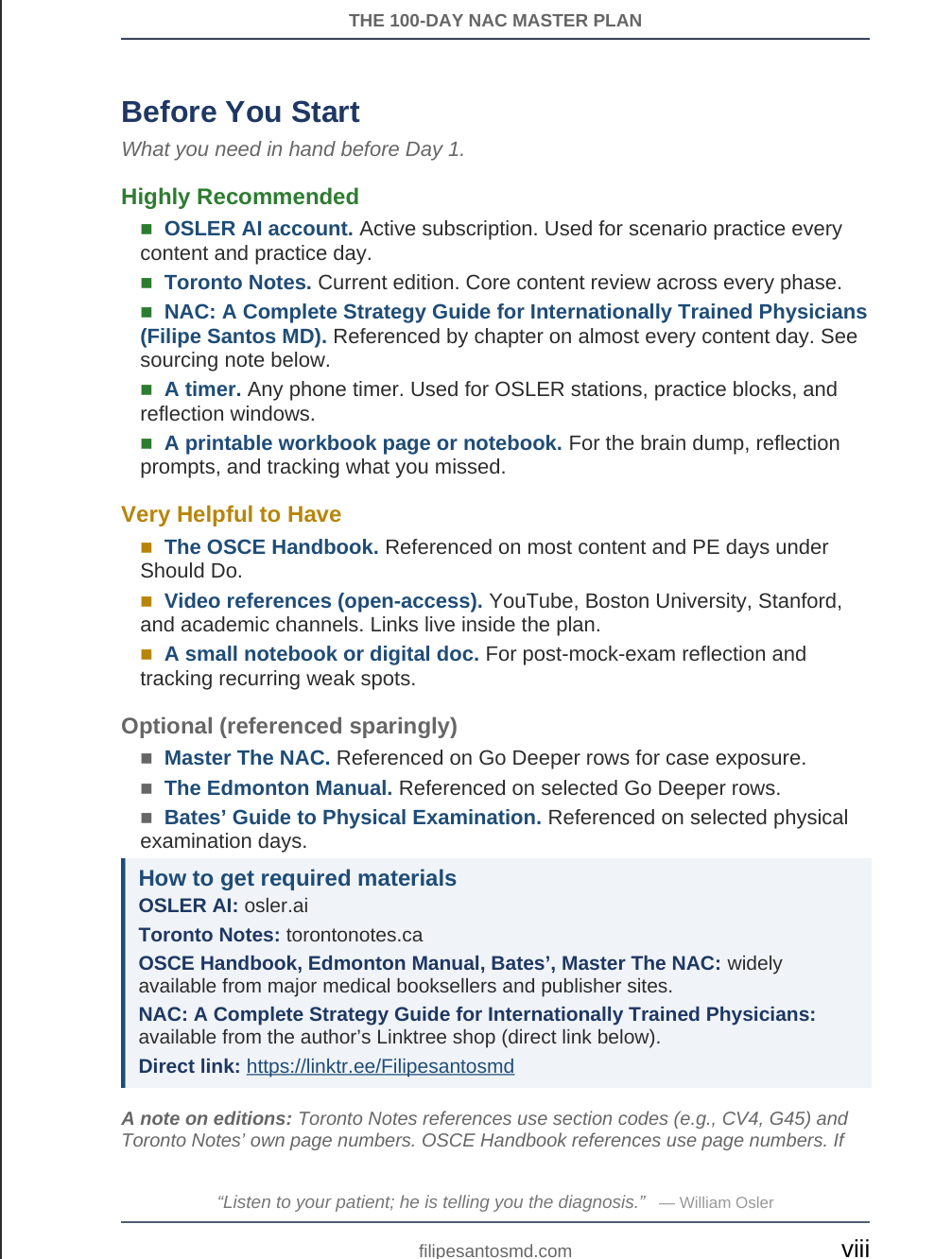
Best paired with
The NAC Strategy Guide (referenced on most content days for the frameworks), Toronto Notes,
the OSCE Handbook, the Edmonton Manual, and Bates’ Guide to Physical Examination on
selected days. OSLER AI is optional but highly recommended for the practice blocks. The plan
tells you when to use each resource.
About the author
Dr. Filipe Santos is an anesthesiologist and Assistant Professor at the University of Toronto,
where he teaches medical students and residents. He is the author of the Path to Practice Series.
Format: Digital PDF, 7×10 Access: Instant access after purchase | No physical shipment.
Price: $89 CAD
Look Inside